Honey
the sweetest.
wobbly, anyway
- arrived
- almost seven years ago
- age
- around 7 years
- colour
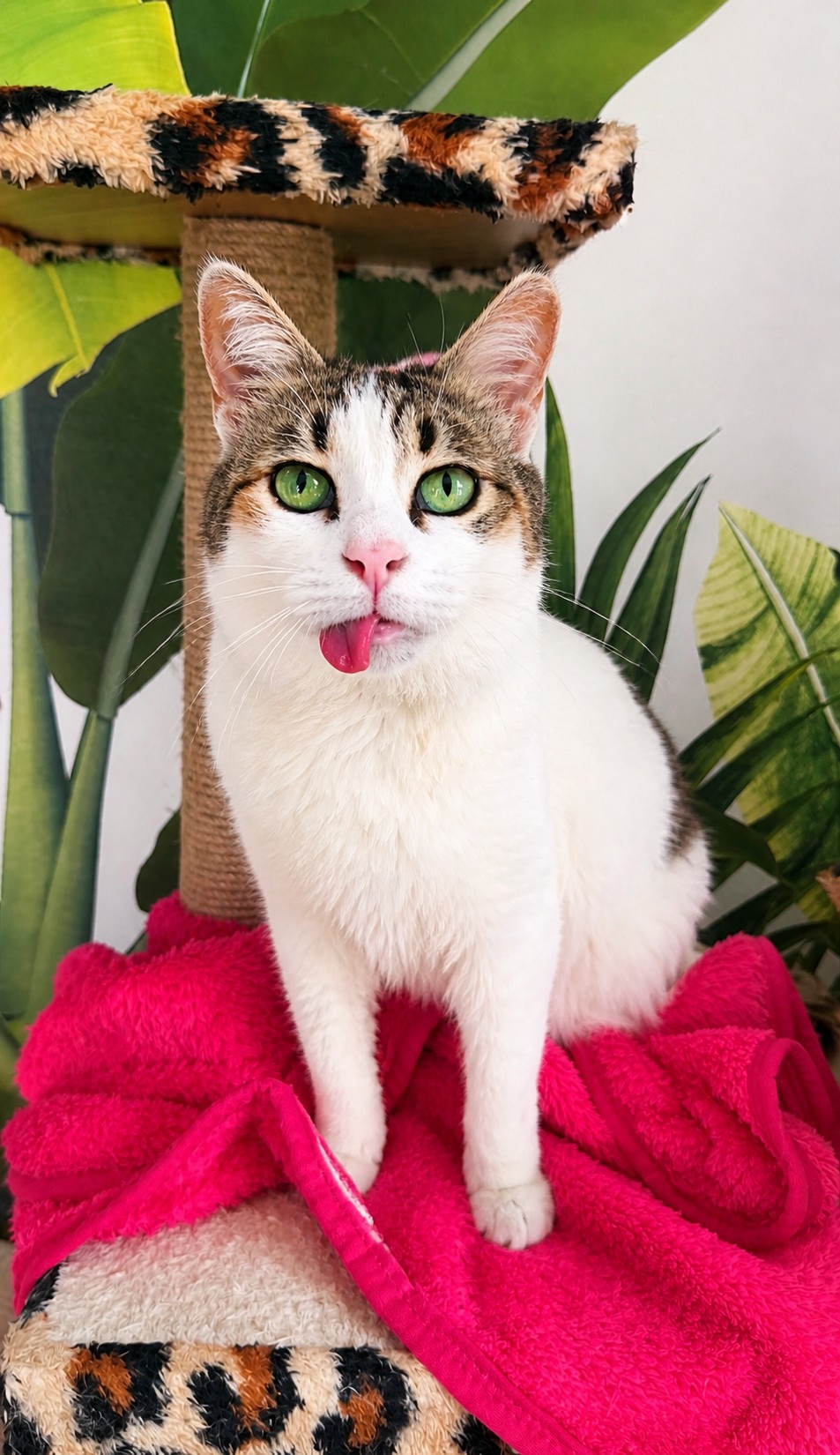
- Calico
- currently
- wobbly, anyway
Honey was found nearly seven years ago when she was about six months old. She was discovered at a local “pod,” a place where people regularly feed stray animals who return at the same time every day. When she was found, she was wobbling and struggling to stand properly. The woman who found her wasn’t sure what was wrong, so she took Honey to the vet. At first, they thought it might be a vitamin D deficiency.
Because Honey could barely stand, she wouldn’t have survived on the streets. That’s when I decided to take her in and care for her. I hoped that with supplements, she would improve — but she didn’t. She remained wobbly, though full of life.
At one point, I even considered finding her a permanent home. Someone was ready to adopt her, but at the very last moment, I changed my mind. I had completely fallen in love with Honey. She is the sweetest cat I’ve ever known, and I couldn’t let her go.
Honey became the second cat we chose to keep out of all the rescues we’ve cared for. Sadly, our first rescue passed away, which made Honey even more special to us. Today, she is the oldest of all our cats — and without a doubt, the sweetest.
Later that year, we took Honey for further tests, including an MRI. That’s when we learned she has a muscle-wasting disease. This means the muscles and bones in her back legs will gradually weaken over time, and she may eventually become paralyzed. To support her, Honey takes neurological supplements every month to help keep her nervous system and bones as strong as possible.
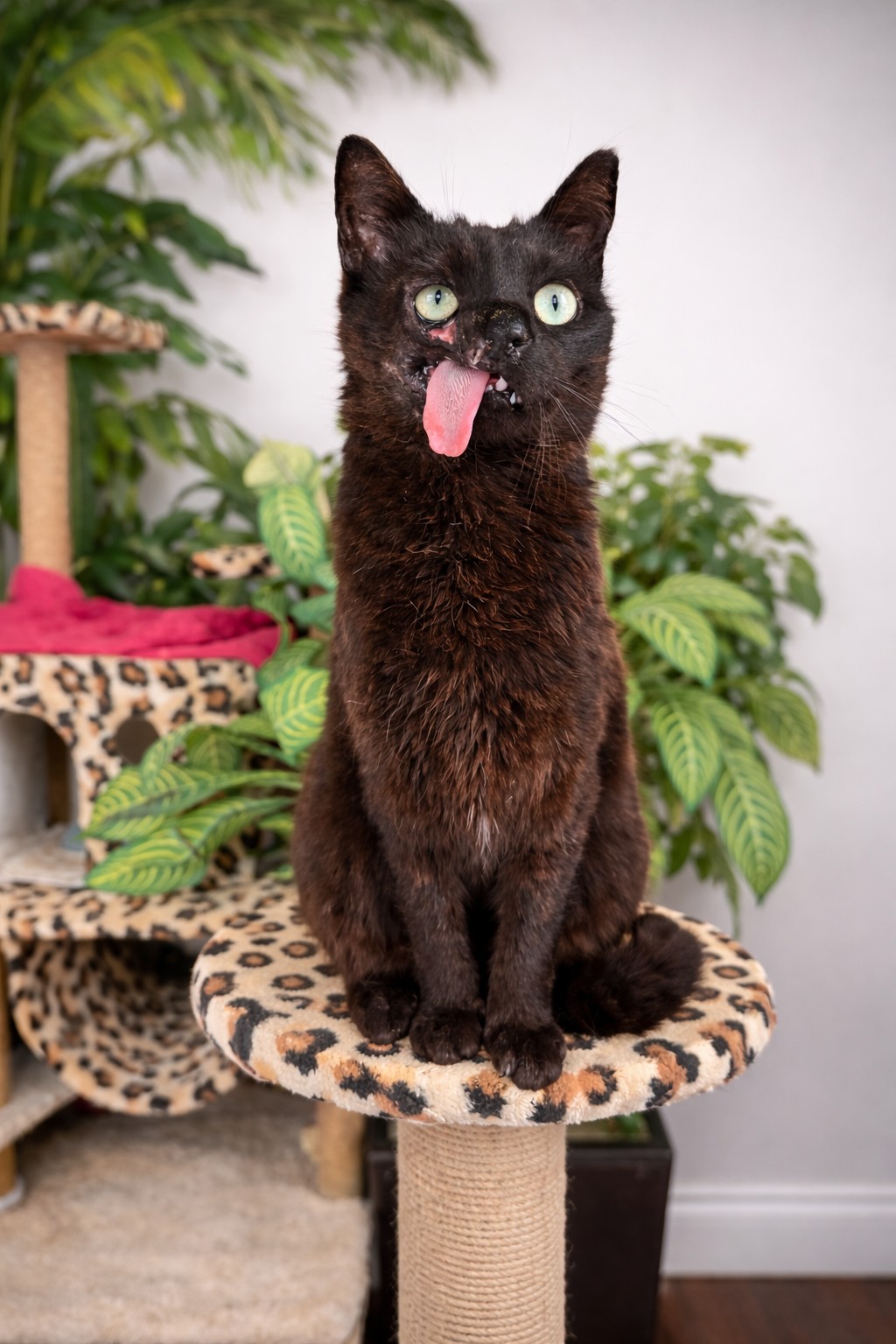
As a kitten, Honey also suffered from severe gingivitis, and unfortunately, all of her teeth had to be removed. Despite this, she eats incredibly well — biscuits, dry food, wet food, and even chicken.
Honey is truly unstoppable. No matter what challenges she faces, she never gives up.
“Every donation, however small, has gone straight into vet bills, soft food, supplements, surgeries, and the slow work of giving these animals a real life. It really does add up.”
- Monthly neurological supplements for her nervous system and bones
- Soft food alongside biscuits — she has no teeth, but she eats anyway
- Quiet handling on the days her back legs feel weaker
it goes into the bowl. directly. promise.